

Teaching Dance in the UK
Dance is taught as part of Physical Education (PE) in Key Stage 3, and is offered as a specialist subject at GCSE (KS4) and A-Level (KS5). It blends creative expression, choreography, performance, and critical appreciation of dance works and styles.
Are you interested in teaching Dance in the UK? At Teach in, we can help you secure either a permanent role, fixed-term contract or guaranteed supply work in schools in London and across the UK. Below is some information to give you an insight into teaching your specialist subject within the British National Curriculum. The good news is that Australian, New Zealand and Canadian teachers have trained and teach in a very similar way to teachers in England, so the transition to working in a UK school is not too hard. We also make sure all the teachers we help into a role in the UK is assigned an in-school mentor and also a UK Consultant, both available to assist in getting started in a British school.
- Curriculum Context:
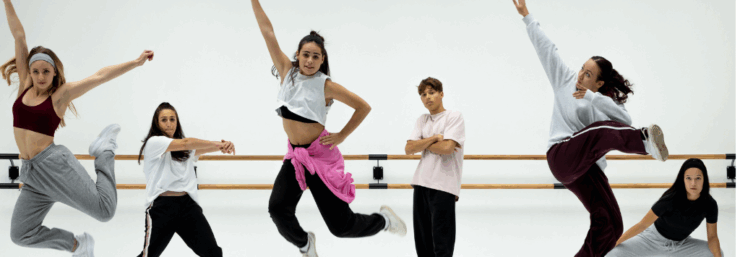
- Dance is not a standalone subject at KS3 but is often taught within PE or as an enrichment/creative arts option.
- The focus is on expression, creativity, and physical literacy.
What Students Learn:
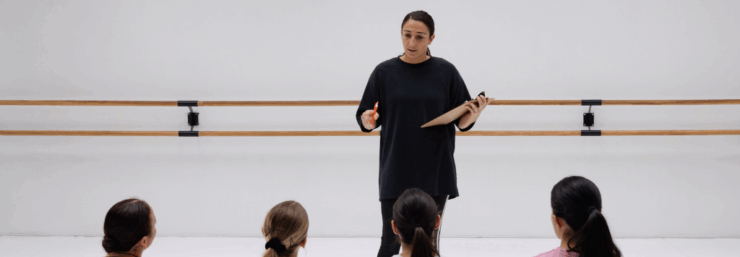
- Basic movement skills and physical coordination.
- Exploration of different dance styles (e.g., contemporary, hip hop, cultural forms).
- How to choreograph simple routines using basic motifs and structures.
- Performing solo and in groups.
- Giving and receiving feedback (basic evaluation).
What It’s Like to Teach:
- Lessons are practical and energetic.
- You’ll guide students in creating, refining, and performing short dance pieces.
- Assessment is based on participation, teamwork, and creativity, not technical perfection.
KEY STAGE 4 (Ages 14–16) — GCSE Dance
- Offered by exam boards like AQA and OCR.
- Course Components:
- Performance (30%)
- Two dance performances: one solo, one duet/trio.
- Emphasis on physical control, spatial awareness, timing, and projection.
- Choreography (30%)
- Students create their own solo or group dance in response to a set stimulus.
- Must show creative use of space, dynamics, and structure.
- Dance Appreciation (Written Exam – 40%)
- Analyse professional dance works (e.g., Emancipation of Expressionism, Artificial Things).
- Study dance terminology, choreographic devices, and performance skills.
- Develop evaluative writing and critical thinking.
What It’s Like to Teach:
- A mix of studio-based practical sessions and classroom theory.
- You’ll need to break down professional dance works and link them to students’ own choreography.
- Requires strong knowledge of contemporary dance and some theoretical frameworks.
- Assessment is both practical and academic.

KEY STAGE 5 (Ages 16–18) — A-Level Dance
- Typically follows the AQA specification.
- Course Components:
- Performance & Choreography (50%)
- Solo performance and performance in a quartet.
- Creation of a group dance (student-choreographed) in response to a stimulus.
- Critical Engagement (50%)
- Written paper covering:
- Knowledge of set professional works and choreographers.
- Analysis of stylistic features, movement components, structure, and context.
- Comparative study of dance in historical and cultural contexts.
What It’s Like to Teach:
- You’ll need to develop students’ technical dance ability, choreographic sophistication, and academic literacy.
- Lessons involve studio practice, watching and discussing professional works, and preparing for written exams.
- Strong focus on self-discipline, reflective practice, and theoretical depth.
Key Skills Developed in Dance:
Skill How It’s Taught
Creativity Through choreography and improvisation
Teamwork Group performance and rehearsals
Confidence & Expression Solo performances and peer evaluation
Physical Fitness & Control Dance technique and warm-up work
Critical Thinking Analysis of professional dance works
Cultural Awareness Exposure to global and diverse dance forms
Tips for Overseas Teachers:
- Dance in UK schools often focuses on contemporary dance, not just classical styles.
- Familiarity with UK-based companies (e.g., Rambert, DV8, Akram Khan) is useful.
- You’ll need to assess both practical performance and written analysis.
- A good understanding of choreographic devices and dance elements is expected.
Summary: What It’s Like to Teach Dance in the UK
Stage Focus Assessment Teaching Style
KS3 Movement, creativity, group work Mostly practical, informal Exploratory, fun
KS4 Performance, choreography, analysis Practical + written exam (GCSE) Balanced between studio & theory
KS5 Advanced choreography and critical theory Practical + written A-Level exam Academic + performance-based

Teach dance in the UK- find out how! Click here.