Primary KS1 and KS2 Teaching in the UK
The National Curriculum in England sets out subjects and content taught in state primary schools for children aged 5 to 11. It’s split into two key stages:
Key Stage Age Range Year Groups Typical Student Age
KS2 7–11 Year 3–6 7–8 to 10–11
Children start formal schooling in Reception (age 4–5), which follows the Early Years Foundation Stage (EYFS) before moving into the Key Stages.
Are you interested in teaching in a Primary school in the UK? At Teach in, we can help you secure either a permanent role, fixed-term contract or guaranteed supply work in schools in London and across the UK. Below is some information to give you an insight into teaching your specialist subject within the British National Curriculum. The good news is that Australian, New Zealand and Canadian teachers have trained and teach in a very similar way to teachers in England, so the transition to working in a UK school is not too hard. We also make sure all the teachers we help into a role in the UK is assigned an in-school mentor and also a UK Consultant, both available to assist in getting started in a British school.

What Subjects Are Taught?
Core Subjects (Statutory – must be taught):
- English
- Mathematics
- Science
Foundation Subjects (Also statutory):
- Art and Design
- Computing
- Design and Technology (DT)
- Geography
- History
- Music
- Physical Education (PE)
- Languages (KS2 only, usually French or Spanish)
- Religious Education (RE) – required, but parents can opt out.
Personal, Social, Health and Economic Education (PSHE) is not compulsory but widely taught, especially Relationships & Health Education, which is mandatory.

What’s It Like to Teach KS1 and KS2?
Planning
- Lessons are planned around detailed objectives found in the National Curriculum.
- Teachers often work from schemes of work provided by the school or commercial publishers (e.g., White Rose Maths, Talk for Writing, Read Write Inc).
Assessment
- Teachers do formative assessment daily (observations, questioning, marking).
- Summative assessments happen each term or year.
- SATs (Standard Assessment Tests) are taken:
- At the end of KS1 (Year 2): reading, writing, maths.
- At the end of KS2 (Year 6): reading, maths, grammar, spelling, punctuation.
Teaching Style
- Topic-based, cross-curricular learning is common (e.g., linking geography and English).
- Phonics is heavily used in KS1 for reading instruction.
- Teachers often teach all subjects (especially in KS1), though in upper KS2, some schools begin subject-specialist teaching for PE, languages, or music.
Pupil Experience
- Lessons are structured but interactive.
- There’s a focus on developing independence, creativity, and resilience.
- Inclusion and differentiation are essential – catering to children with a range of needs (SEN, EAL, gifted and talented).
Breakdown by Key Stage
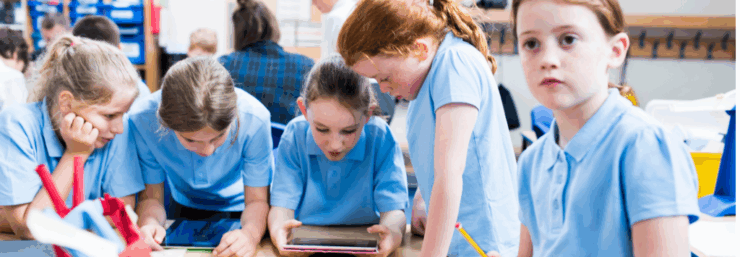
KS1 (Years 1–2)
- Big focus on phonics, early number skills, and classroom routines.
- Phonics Screening Check at the end of Year 1.
- Classes are generally nurturing and play-based, especially Year 1.
KS2 (Years 3–6)
- Content becomes more structured and challenging.
- Increased independence and responsibility.
- Year 6 SATs are a major milestone; many schools focus heavily on preparation.
- Children begin to use more complex vocabulary, written reasoning, and multi-step problem solving.
Key Features for Overseas Teachers
What You Should Know Why It Matters
Emphasis on literacy and numeracy Strong national focus on reading, writing, and maths
High level of differentiation Classes are mixed-ability and inclusive
Strong behaviour and safeguarding focus UK schools have strict behaviour and child protection rules
Use of standardised tests (SATs) You’ll need to prepare students for these in Year 2 and 6
Teaching all subjects in KS1 You may be responsible for all areas of the curriculum
Planning time and workload Teachers often get PPA (Planning, Preparation & Assessment) time during the week
Summary
Aspect KS1 (5–7 years) KS2 (7–11 years)
Focus Phonics, early maths, confidence Fluency, problem-solving, knowledge
Teaching style Nurturing, play-based elements Structured, more formal learning
Subjects taught All subjects by one teacher Often taught by one teacher; specialists in larger schools
Assessments Phonics check, end of KS1 SATs End of KS2 SATs in English and Maths
Primary teaching jobs are available in state, faith and independent schools across the UK.
We would love to help you live and work in the UK.
Reach out for a chat with a Teacher/ Consultant today. Click here to get started.