

Teaching DT (Design Technology) in the UK
Design and Technology is a practical, creative subject where students design, prototype, and make products to solve real-world problems. It involves materials, tools, digital technologies, and design thinking—integrating creativity, maths, science, and engineering skills.
Are you interested in teaching Design Technology in the UK? At Teach in, we can help you secure either a permanent role, fixed-term contract or guaranteed supply work in schools in London and across the UK. Below is some information to give you an insight into teaching your specialist subject within the British National Curriculum. The good news is that Australian, New Zealand and Canadian teachers have trained and teach in a very similar way to teachers in England, so the transition to working in a UK school is not too hard. We also make sure all the teachers we help into a role in the UK is assigned an in-school mentor and also a UK Consultant, both available to assist in getting started in a British school.
Key Stage 3 (Ages 11–14, Years 7–9)
Curriculum Focus:
KS3 is about building core skills and confidence in designing, making, evaluating, and understanding materials and processes.
Students Learn To:
- Use design processes: identifying user needs, researching, sketching ideas, modelling.
- Work with different materials and systems: woods, metals, plastics, textiles, electronics, CAD/CAM.
- Apply maths and science in design decisions.
- Understand the impact of technology on society and the environment.
- Develop practical skills using hand tools, machines, and digital tools.
What It’s Like to Teach:
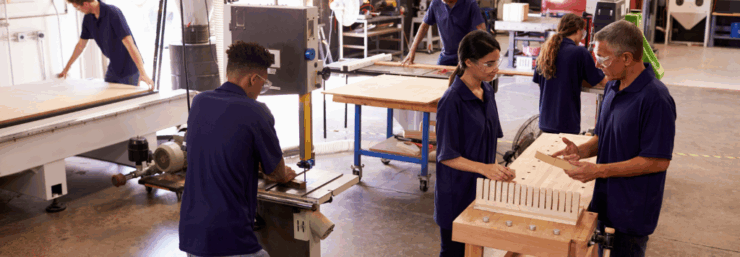
- Very hands-on—lessons involve workshops, demonstrations, and safety training.
- Pupils rotate through different material areas (e.g. product design, textiles, graphics, food).
- You’ll need to manage behaviour in practical spaces carefully.
- There’s a focus on iterative design rather than “follow-the-instructions” projects.

Key Stage 4 (Ages 14–16, Years 10–11)
Most pupils take GCSE Design and Technology (Edexcel, AQA, or OCR boards).
Content Includes:
- Core technical principles (materials, forces, systems).
- Specialist technical knowledge (based on focus area—e.g., product design or textiles).
- Designing and making principles (research, CAD, prototyping, evaluating).
Assessment:
- 50% NEA (Non-Exam Assessment):
- A design-and-make project (30–35 pages), including research, development, modelling, making, testing and evaluating.
- 50% Written Exam:
- Tests technical knowledge, design theory, and problem-solving.
What It’s Like to Teach:
- You’ll support students through the entire design process—from identifying a problem to delivering a finished prototype.
- Lessons involve theory, sketching, modelling, CAD, and practical work.
- Requires planning for equipment/materials and health & safety.
- Students need structure and timelines for the NEA.
Key Stage 5 (Ages 16–18, Years 12–13)

Options include:
- A-Level Design and Technology (Product Design or Fashion/Textiles)
- BTEC Nationals in Engineering, Product Design, or Creative Practice
A-Level (Academic route):
Focus:
- Advanced design processes, sustainability, innovation, and commercial manufacturing.
- Students use CAD/CAM, electronics, materials science, and evaluate design in social contexts.
- Assessment:
- 50% NEA (Design project) – a large, self-directed project over the course of the year.
- 50% Written exams – covering technical principles and design processes.
BTEC (Vocational route):
- Focuses on real-world applications and coursework-based assessment.
- Units in product development, 3D design, manufacturing, and project management.
What It’s Like to Teach at KS5:
- You act more like a design mentor—guiding students to independently manage design projects.
- You’ll help students use industry-standard tools like SolidWorks, AutoCAD, or Adobe Creative Suite.
- Students work on longer-term design briefs and are expected to present work professionally.
Common Tools and Resources:
Laser cutters, 3D printers, scroll saws, soldering irons.
Software: Tinkercad, SketchUp, Onshape, 2D Design, SolidWorks.
Adobe Suite (Photoshop, Illustrator) for graphics-heavy courses.
Summary Table
Stage Focus Areas Assessment What You’ll Teach
KS3 Foundations in design, materials, and making School-set projects Hands-on making, sketching, design thinking
KS4 GCSE Design & Technology 50% coursework (NEA), 50% exam CAD, technical theory, design project
KS5 A-level D&T or BTEC NEA/project + exams or coursework units Advanced prototyping, sustainability, user-centred design
Key Notes for Overseas Teachers:
- D&T is both creative and technical: be ready to teach theory and supervise practical work.
- You’ll manage workshops and tech spaces, so understanding UK health and safety standards is essential.
- Schools vary in what specialisms they offer (e.g. textiles, graphics, engineering).
- Assessment is very project-based, especially at GCSE and A-level.
- It’s a rewarding subject for students who are hands-on, visual learners, or interested in design careers.
Are you a Design Technology teacher looking to teach in the UK? Get in touch.